

Establishing a Baseline for Regulatory Readiness, Operational Excellence, and Sustainable Sterile Processing Governance Across Healthcare Systems
Insights from Rapid Diagnostic Assessments Conducted Across Two Complex Healthcare Systems
Executive Summary
Sterile processing has emerged as one of the most operationally critical and regulatorily scrutinized functions in modern healthcare. Once considered a back-of-house, technical service, sterile processing today directly influences patient safety, infection prevention, surgical throughput, physician confidence, regulatory readiness, and organizational risk.
As healthcare systems have rapidly expanded procedural services into ambulatory clinics, specialty practices, cancer centers, and physician-owned environments, sterile processing infrastructure has frequently failed to keep pace. The result is significant operational variation, particularly in decentralized settings where oversight is fragmented and governance structures are inconsistently defined.
Surgical Directions recently conducted Rapid SPD Diagnostic assessments across two distinct healthcare environments: a large, academic medical center operating a high-volume, complex inpatient and surgical services program, and a major academic health system with an extensive ambulatory clinic network spanning dozens of decentralized procedural environments. Though the operational contexts of these organizations differed significantly, the findings were strikingly consistent.
Assess the risk for your organization with a short quiz from Surgical Directions.
Across both assessments, major themes emerged in six consistent domains:
- Operational variation and workflow inconsistency
- Workforce competency gaps and education standardization deficits
- Governance fragmentation and limited enterprise accountability
- Documentation, traceability, and quality management gaps
- Environmental and physical infrastructure misalignment
- Absence of meaningful data, metrics, and performance reporting
This white paper presents findings and themes from both assessments and offers a framework for how healthcare executives can respond proactively, before operational vulnerabilities become regulatory findings or patient safety events.
CASE STUDIES

Case Study One | Inpatient Surgical Services Environment
Organization Profile
The first organization assessed was a large, academic medical center with a complex, high-volume surgical program. The facility supports a broad spectrum of surgical specialties, serves as a Level I trauma center, and operates multiple procedural cores across physically distinct areas of the institution. The sterile processing department had undergone a significant physical relocation in the period prior to the assessment, creating workflow disruptions that compounded existing operational challenges.
Surgical Directions engaged broadly across the organization, conducting interviews with approximately 80 individuals spanning hospital leadership, surgeons, nursing teams, sterile processing staff, supply chain, and quality leadership. Onsite assessments included observation of all primary sterile processing areas, instrument transport workflows, case cart processes, and operational interfaces between sterile processing, the operating room, and supply chain.
Key Themes and Findings
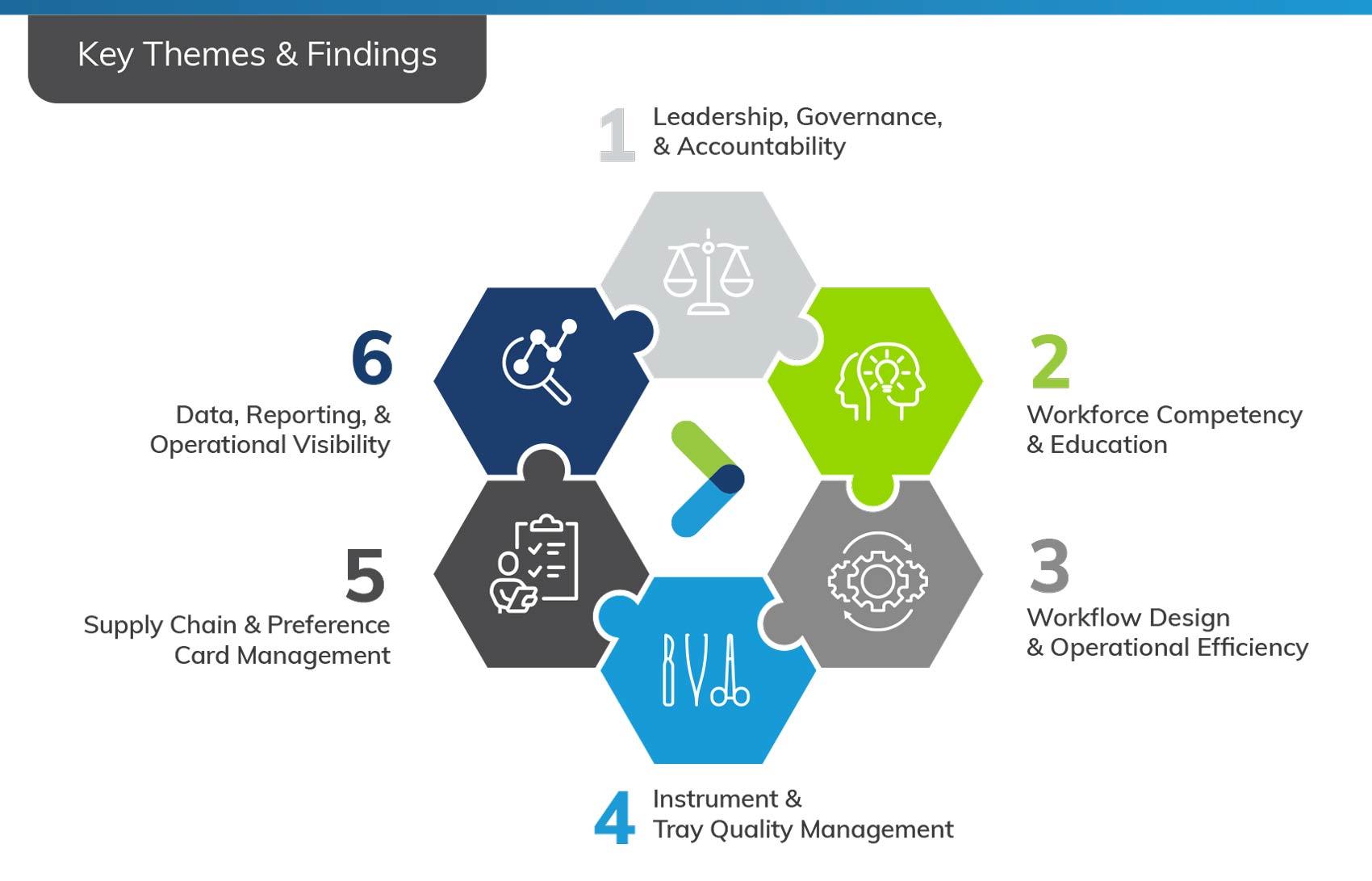
1 | Leadership, Governance, and Accountability
Governance structures surrounding sterile processing were fragmented across the organization. While leadership at the executive and departmental level expressed genuine commitment to improvement, operational accountability mechanisms were insufficiently defined. Quality controls were inconsistently applied across shifts, particularly during evening and weekend operations when supervisory presence was limited.
Escalation processes for sterile processing issues lacked clarity, and interdepartmental communication between sterile processing, the operating room, and supply chain operated in silos. The organization had begun building collaborative task force structures to address these challenges, but a unified governance framework with clear accountability pathways had not yet been established.
2 | Workforce Competency and Education
The sterile processing workforce faced significant competency and education challenges. High turnover among supervisors and frontline staff had disrupted institutional knowledge and operational continuity. Many team members lacked access to structured onboarding programs, and certification pathways were not consistently supported or tracked.
The assessment identified the need for a robust education infrastructure including formal orientation processes, competency validation aligned to departmental roles, and ongoing education programming across all sterile processing functional areas: decontamination, assembly, sterilization, and case cart management.
3 | Workflow Design and Operational Efficiency
The department’s recent physical relocation had introduced significant workflow inefficiencies that had not been fully resolved at the time of assessment. Instrument transport pathways, processing zone layout, and operational flow between procedural areas and sterile processing were suboptimal, creating lost productivity and staff frustration.
Add-on surgical cases, averaging approximately 18 per day, combined with Level I trauma volume created persistent pressure on instrument availability and tray turnaround cycles. Standard operating procedures across key operational areas were incomplete or inconsistently followed, and service-level agreements between sterile processing and the operating room were not formalized.
4 | Instrument and Tray Quality Management
Instrument quality and tray accuracy emerged as major operational concerns. Tray assembly did not consistently follow count sheets, instrument tracking and scanning compliance was unreliable, and instrument sets showed evidence of inadequate inspection for functionality, cleanliness, and condition. Peel-pack inventory to supplement incomplete instrument sets was limited, requiring staff to open full tray sets when individual instruments were unavailable.
Case cart error rates and tray defect rates were not consistently measured or reported, limiting the organization’s ability to quantify the scope of the problem or drive accountability for improvement.
5 | Supply Chain and Preference Card Management
Supply chain operations created compounding pressures on sterile processing performance. Incomplete and inaccurate case carts generated daily operational workarounds. Stock shortages, backorders, and restocking delays disrupted surgical readiness. Preference cards were frequently inaccurate, had not been updated using supply utilization data, and contained inconsistent nomenclature that complicated instrument identification and tray building.
The organization was in the process of transitioning to an updated electronic health record system, which added complexity to preference card standardization efforts and required careful coordination between sterile processing, supply chain, and clinical teams.
6 | Data, Reporting, and Operational Visibility
The organization lacked reliable, actionable data infrastructure to support sterile processing performance management. Multiple tracking systems produced inconsistent or difficult-to-interpret data, visible dashboards were absent from both the sterile processing department and the operating room, and key performance indicators, including tray error rates, first case on-time starts, and turnover times, were not consistently measured against established benchmarks.
Without reliable data, the organization faced significant challenges building staff accountability, tracking improvement progress, and demonstrating operational performance to leadership.
Assessment Outcome: The assessment produced a prioritized roadmap across seven operational domains: Leadership & Governance, Competencies & Education, Staffing & Retention, Strategy & Workflow, Daily Operations, Supplies & Preference Cards, and Data & Reporting. The organization was positioned to pursue a phased implementation approach, beginning with governance establishment and high-priority operational improvements.

Case Study Two | Academic Health System Ambulatory Network
Organization Profile
The second organization assessed was a major academic health system operating an extensive ambulatory clinic network spanning multiple geographic regions. The assessment scope encompassed all ambulatory clinic locations to evaluate which sites performed procedures requiring instrument reprocessing and to characterize the current state of sterile processing practices across the network.
Of approximately 115 clinics in the network, over 50 were identified as performing procedural services. More than 30 of those clinics required some form of instrument reprocessing. The breadth of clinical settings included dermatology, urology, gynecology, oncology, fertility, family medicine, ophthalmology, otolaryngology, vascular surgery, and numerous others, each operating with independently developed workflows and varying levels of sterile processing sophistication.
Instrument reprocessing across the network was performed predominantly by medical assistants, with technicians and registered nurses performing this function at a smaller number of sites. The assessment included virtual interviews across the majority of the clinic network and onsite assessments at a representative sample of sites selected based on risk indicators and sterilization complexity.
Key Themes and Findings
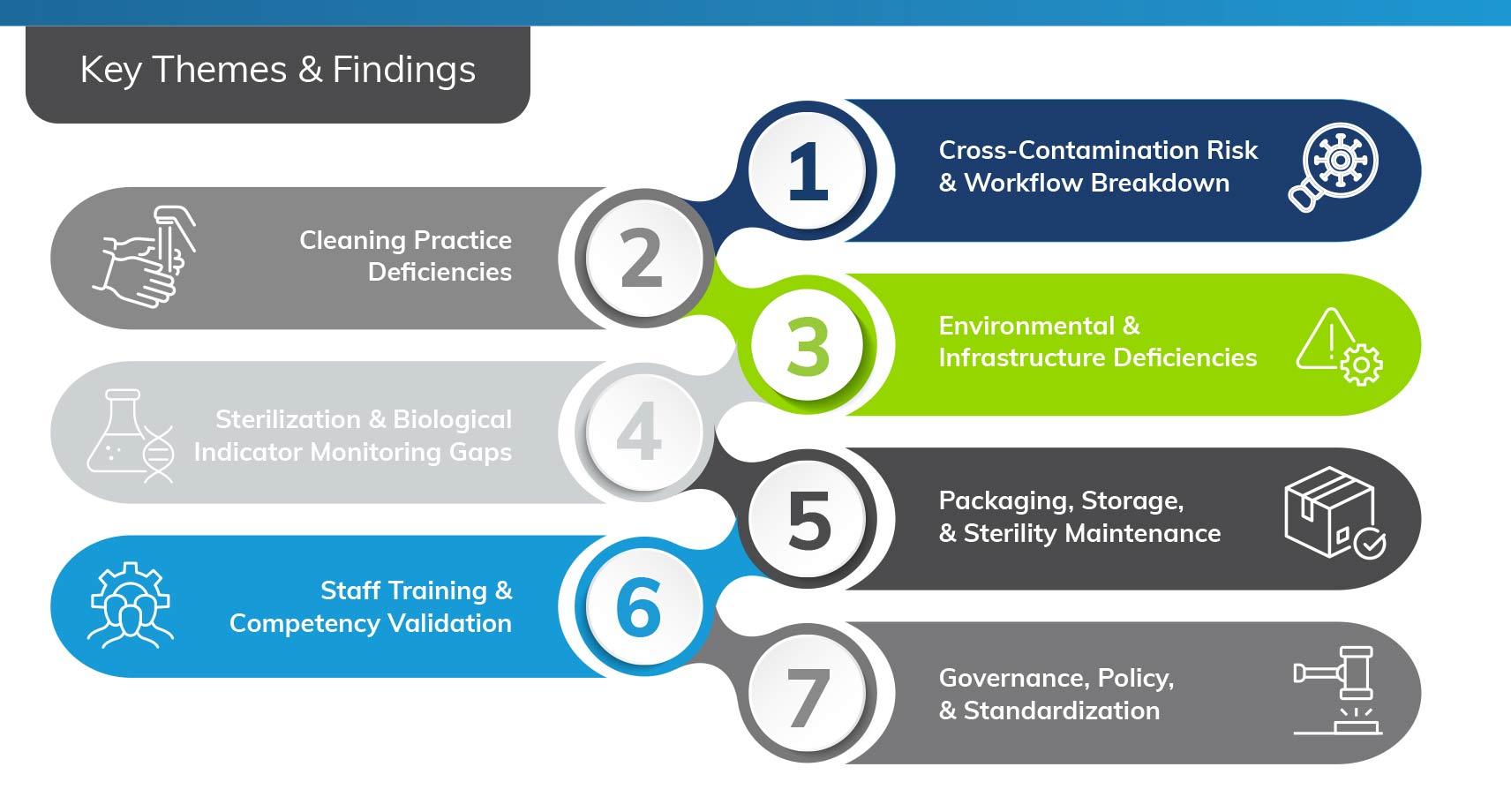
1 | Cross-Contamination Risk and Workflow Breakdown
The most immediately concerning finding across the ambulatory network was widespread risk of cross-contamination through improper instrument transport. Dirty instruments were frequently transported without appropriate containment, and the physical separation of dirty and clean workflows was inconsistently maintained across clinic environments.
PPE compliance during decontamination activities was incomplete at multiple sites, with staff observed without gowns, appropriate glove protection, or eye protection during instrument handling. These gaps represented both immediate patient safety risks and potential regulatory vulnerabilities.
2 | Cleaning Practice Deficiencies
Manual instrument cleaning practices were inconsistent and frequently did not align with manufacturer Instructions for Use (IFU). Issues identified across the network included inappropriate soaking practices, use of incorrect detergents, and use of metal cleaning instruments that could damage delicate surgical tools. IFU documents were frequently unavailable at point of use, and staff demonstrated limited awareness of the requirement to follow manufacturer-specific reprocessing instructions.
These cleaning deficiencies are particularly significant because inadequate cleaning at the front end of the reprocessing cycle compromises the effectiveness of all downstream sterilization or high-level disinfection processes, regardless of how correctly those downstream steps are performed.
3 | Environmental and Infrastructure Deficiencies
Environmental and physical infrastructure gaps were among the most broadly distributed findings in the assessment, identified across the majority of assessed sites. Common deficiencies included absence of properly functioning eyewash stations in reprocessing areas, inadequate ventilation, and inconsistent temperature and humidity monitoring in sterile storage environments.
Physical space constraints at many clinic locations made proper dirty-to-clean workflow separation operationally challenging. In some cases, instrument reprocessing was occurring in spaces not designed for that purpose, without the environmental controls required by applicable standards.
4 | Sterilization and Biological Indicator Monitoring Gaps
Biological indicator testing was not performed at appropriate frequencies across multiple sites, and staff at several locations were unclear on failure protocols or how to respond to a positive biological indicator result. Sterilization documentation was inconsistently maintained, with logs for key monitoring activities incompletely or sporadically completed.
Load content and configuration practices were inconsistent, and staff awareness of proper sterilization parameters for different instrument types and packaging configurations was variable across the network.
5 | Packaging, Storage, and Sterility Maintenance
Improper packaging and storage practices were identified across the large majority of assessed sites, making this the most broadly distributed finding in the ambulatory assessment. Issues included peel packs stored in active procedure rooms rather than in controlled sterile storage environments, improper packaging techniques, and inadequate labeling and traceability practices.
Sterile storage conditions were frequently inconsistent with standards for temperature, humidity, and traffic control. Items processed and packaged by clinic staff were often stored without appropriate controls to maintain sterility integrity between reprocessing and patient use.
6 | Staff Training and Competency Validation
No standardized onboarding or annual competency validation program existed across the clinic network. Staff performing instrument reprocessing, the majority of whom were medical assistants without formal sterile processing training or certification, reported learning primarily through informal peer instruction or self-direction.
Formal training programs, preceptor models, and structured competency assessments were absent across the network. Staff were frequently unsure of proper processes and expressed uncertainty when asked about specific reprocessing requirements, IFU compliance, or regulatory standards applicable to their practice setting.
7 | Governance, Policy, and Standardization
Governance and standardization gaps were identified as system-level findings applicable to the entire clinic network. Policies governing sterile processing in ambulatory settings were either absent or unknown to clinic staff. Practices varied substantially from site to site, reflecting the absence of any centralized operational framework or enterprise accountability structure for ambulatory sterile processing.
There was no centralized body with defined responsibility for ambulatory sterile processing oversight, no standardized audit process, no defined KPIs, and no reporting structure through which performance gaps could be escalated or addressed systematically.
Assessment Outcome: The assessment produced an enterprise-wide roadmap structured across three implementation phases: (1) Governance and Immediate Risk Reduction, focused on creating alignment structures and eliminating the highest-risk practices; (2) Standardization and Training, encompassing education program development, policy standardization, and centralized reprocessing design; and (3) Sustainability and Accountability, establishing ongoing audit structures, performance management, and a continuous improvement culture.
Cross-System Findings
Common Themes | Across Both Assessments
Despite the significant differences in organizational type, scale, and care setting between the two assessed systems, the diagnostic findings converged on a consistent set of operational themes. This convergence is not coincidental, it reflects broader industry patterns emerging as healthcare organizations navigate the increasing complexity of sterile processing across diverse and expanding care environments.
Operational Variation and Workflow Inconsistency
Both organizations demonstrated significant operational variation, between shifts in the inpatient environment, and between clinic locations in the ambulatory network. In both cases, this variation was not primarily a product of staff disengagement or organizational indifference. It reflected the absence of centralized operational frameworks capable of ensuring consistent evidence-based practice across complex environments.
Operational standardization is foundational to sustainable sterile processing excellence. Without it, variation naturally accumulates over time, creating increasing risk as procedural volumes grow and oversight structures remain static.
Workforce Competency and Education Infrastructure
Both organizations identified significant gaps in structured competency development and education standardization. In the inpatient environment, high turnover and inconsistent onboarding had created competency discontinuities across the sterile processing workforce. In the ambulatory network, staff performing instrument reprocessing lacked access to any formal training program, and competency validation was essentially absent.
Healthcare organizations increasingly recognize that competency management is not simply a regulatory compliance exercise; it is a core operational strategy for reducing variation, improving patient safety, and building workforce resilience in an environment of persistent staffing challenges.
Governance Fragmentation and Accountability Gaps
In both systems, sterile processing governance was either fragmented or absent. The inpatient organization had multiple task forces and committees addressing related issues but lacked a unified governance structure with clear accountability pathways. The ambulatory network had no centralized oversight body at all, with sterile processing responsibility distributed across dozens of independently operating clinics.
Enterprise-wide sterile processing governance, with defined accountability, cross-functional participation, standardized metrics, and routine audit structures, is becoming an essential organizational capability for healthcare systems of any scale or complexity.
Documentation, Traceability, and Quality Management
Both assessments identified documentation gaps that limited organizational visibility into sterile processing performance and created regulatory vulnerability. In the inpatient setting, instrument tracking and scanning compliance was unreliable. In the ambulatory network, sterilization logs and biological indicator documentation were inconsistently maintained.
Documentation integrity supports process consistency, quality assurance, operational visibility, risk reduction, survey readiness, and accountability management. As sterile processing oversight continues evolving, organizations should anticipate increasing expectations surrounding measurable quality management and operational reporting.
Environmental and Physical Infrastructure Alignment
Both settings demonstrated environmental and physical infrastructure gaps that created operational risk. The inpatient organization faced workflow inefficiencies stemming from a recent physical relocation that had not been fully resolved. The ambulatory network showed widespread environmental deficiencies, such as absent eyewash stations, inadequate ventilation, and uncontrolled sterile storage, across a majority of assessed sites.
Sustainable sterile processing excellence requires alignment between physical environment, operational workflows, competency structures, governance oversight, and regulatory expectations. Environmental gaps cannot be addressed through policy alone, they require deliberate investment and operational redesign.
Absence of Meaningful Data and Performance Metrics
Neither organization had established robust data and reporting infrastructure capable of supporting sterile processing performance management at the time of assessment. In the inpatient setting, multiple inconsistent data systems produced unreliable information and lacked visibility through operational dashboards. In the ambulatory network, no performance data existed for sterile processing activities across the clinic network.
Data-driven operational management is increasingly central to sustainable sterile processing excellence. Organizations that build reliable KPI infrastructure, covering tray accuracy, error rates, competency completion, audit results, and environmental monitoring, create the foundation for continuous improvement and meaningful leadership accountability.
A Framework for Executive Action
The findings from these two assessments reflect challenges that are not unique to any single organization. They represent systemic industry patterns that healthcare executives should recognize and respond to proactively. The following framework outlines how organizations can begin positioning themselves for sterile processing excellence.
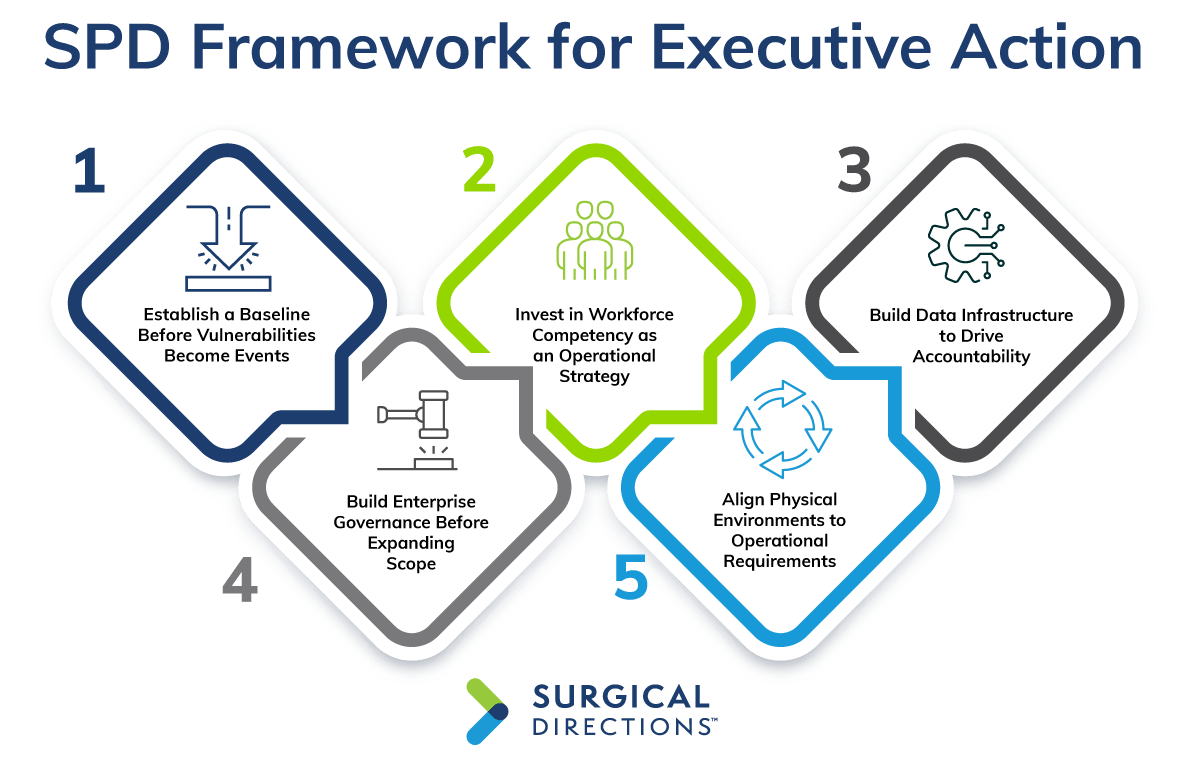
1 | Establish a Baseline Before Vulnerabilities Become Events
The most important step any healthcare organization can take is to establish a comprehensive current-state baseline of sterile processing operations, across all settings where instrument reprocessing occurs. This baseline should evaluate governance structures, workforce competency, workflow design, environmental controls, documentation practices, and data infrastructure.
Organizations that conduct proactive diagnostics gain the ability to identify and address vulnerabilities before they escalate into accreditation findings, infection events, or patient safety concerns. The cost of proactive assessment is a fraction of the organizational, financial, and reputational cost of a reactive response.
2 | Build Enterprise Governance Before Expanding Scope
As healthcare systems continue adding procedural locations and expanding into ambulatory environments, sterile processing governance must expand with them. Executive leadership should ensure that enterprise-wide accountability for sterile processing is clearly defined, with named ownership, cross-functional participation, standardized metrics, routine auditing, and defined escalation pathways.
Without governance infrastructure, operational variation is inevitable. With it, organizations create the conditions for sustainable consistency across complex, decentralized environments.
3 | Invest in Workforce Competency as an Operational Strategy
Sterile processing competency management should be treated as a core operational investment, not a regulatory compliance activity. Structured onboarding, hands-on competency validation, annual assessments, and accessible certification pathways build workforce capability, reduce variation, and support long-term operational resilience.
In environments where sterile processing is performed by non-specialist staff, medical assistants, clinic nurses, or support personnel, the need for structured education is even more acute. These staff members require targeted, role-appropriate training and competency validation to safely perform instrument reprocessing functions.
4 | Align Physical Environments to Operational Requirements
Physical infrastructure must support, not constrain, sterile processing excellence. Organizations should conduct systematic environmental assessments of all procedural settings where instrument reprocessing occurs, identifying gaps in dirty-to-clean separation, environmental monitoring, storage conditions, and staff safety infrastructure.
Where physical constraints limit appropriate reprocessing workflows, organizations should evaluate centralized processing models or transitions to disposable instrumentation as operationally and clinically appropriate.
5 | Build Data Infrastructure to Drive Accountability
Organizations cannot manage what they cannot measure. Healthcare executives should invest in sterile processing data infrastructure that provides visibility into key performance indicators across all settings, covering tray accuracy, defect rates, biological indicator compliance, competency completion, environmental-monitoring results, and audit findings.
Visible, reliable performance data enables staff accountability, supports leadership decision-making, drives continuous improvement, and provides the evidentiary foundation for demonstrating regulatory readiness.
Why Rapid Diagnostics Matter Now
The Rapid SPD Diagnostic model was developed to help healthcare systems establish a comprehensive baseline understanding of sterile processing operations before vulnerabilities escalate into larger organizational concerns. Rather than focusing narrowly on isolated compliance findings, the diagnostic evaluates the broader operational ecosystem surrounding sterile processing performance, combining operational observations, workflow assessments, virtual interviews, environmental evaluations, documentation review, competency assessments, governance analysis, and regulatory readiness evaluations.
Across both healthcare systems assessed, the diagnostic uncovered significant operational gaps that had developed over extended periods without organizational visibility. In both cases, the findings provided a clear, prioritized roadmap for improvement, and established the organizational baseline from which sustained progress could be measured.
What Organizations Gain from a Rapid Diagnostic
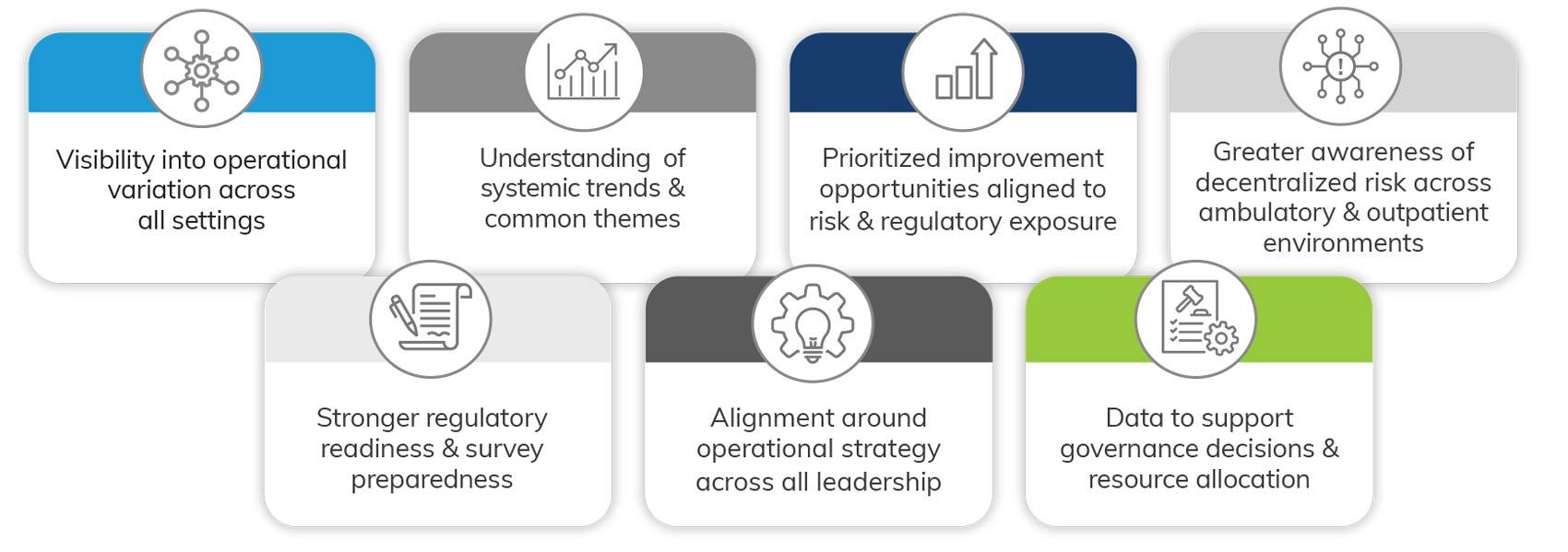
- Visibility into operational variation across all settings
- Understanding of systemic trends and common themes
- Prioritized improvement opportunities aligned to risk and regulatory exposure
- Greater awareness of decentralized risk across ambulatory and outpatient environments
- Stronger regulatory readiness and survey preparedness
- Alignment around operational strategy across all leadership
- Data to support governance decisions and resource allocation
Healthcare organizations that conduct proactive diagnostics are not simply identifying problems. They are building the operational intelligence necessary to strengthen sterile processing before those problems surface in ways that are far more costly to address.
Conclusion
Sterile processing has evolved into one of healthcare’s most strategically important operational functions. The findings from these two rapid diagnostic assessments, one in a complex, inpatient surgical environment, one in a large, decentralized ambulatory network, demonstrate that the operational and governance challenges facing sterile processing are not isolated to any particular organizational type. They are industry-wide, systemic, and growing in consequence as procedural care continues expanding across increasingly complex healthcare delivery environments.
Healthcare executives who treat sterile processing as a background operational function are accepting risk they may not fully recognize. Those who invest in proactive diagnostics, enterprise governance, workforce competency, environmental alignment, and data infrastructure are building the operational foundations for long-term patient safety, regulatory readiness, and organizational resilience.
The time to establish that foundation is before the survey, not after it.
Healthcare organizations that conduct proactive diagnostics are not simply identifying problems. They are building the operational intelligence necessary to strengthen sterile processing before those problems surface in ways that are far more costly to address.
Assess the risk for your organization with a short quiz from Surgical Directions.