

A C-Suite Guide to Stabilizing Costs, Improving Control, and Protecting Surgical Access
Executive Summary
For many hospitals, anesthesiology has become one of the fastest-growing and least predictable expenses in the organization.
Escalating subsidy demands, clinician shortages, rising compensation expectations, recruitment challenges, growing dependence on locum tenens providers, declining reimbursement, and increasing procedural volumes have created a perfect storm for healthcare leaders. Yet despite the financial impact, many organizations lack the data, governance structures, and market intelligence needed to make informed decisions about their anesthesiology model.
The result is often reactive decision-making, costly contract renewals, staffing instability, growing dependence on temporary labor, and limited visibility into the true drivers of anesthesia costs.
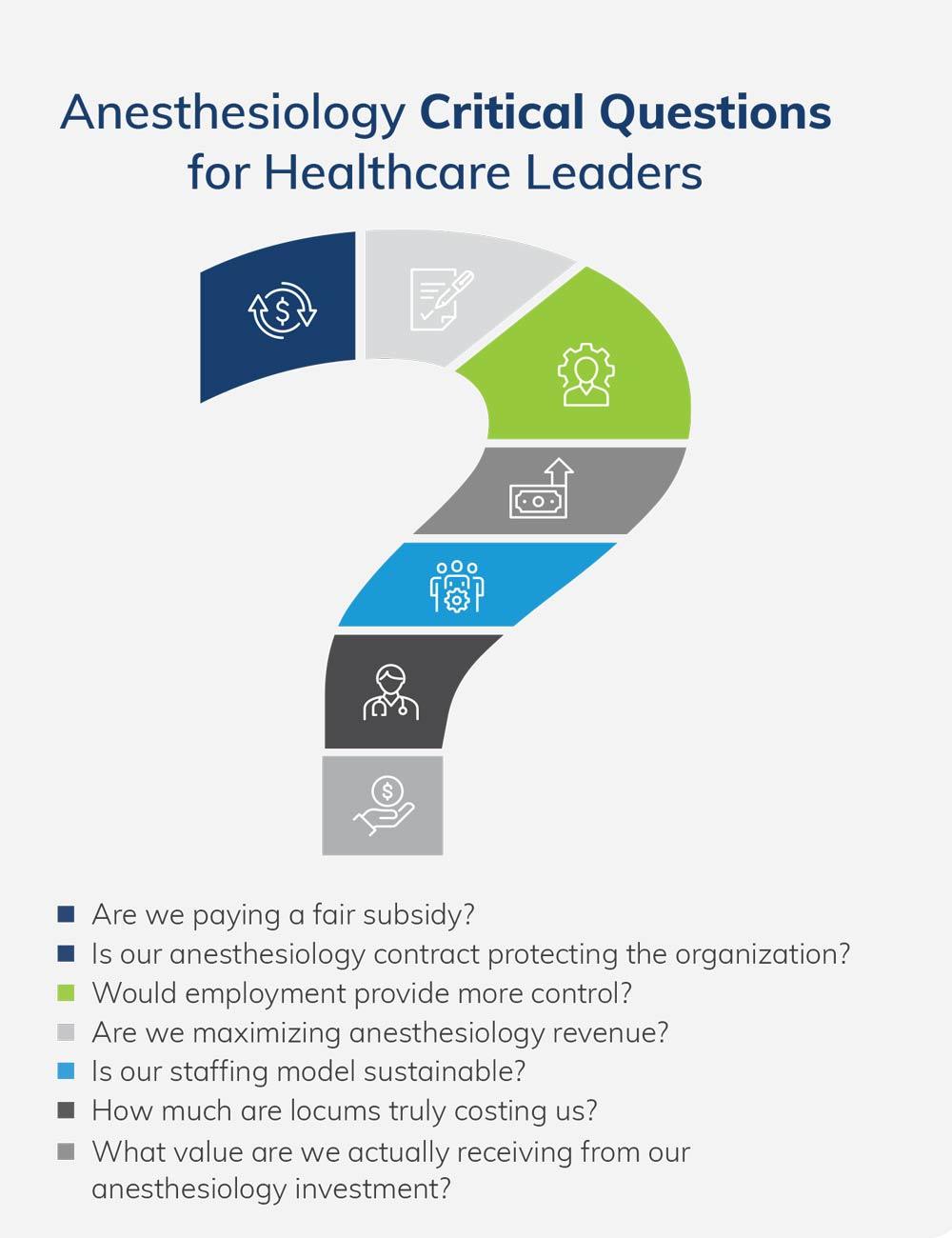
- Are we paying a fair subsidy?
- Is our anesthesiology contract protecting the organization?
- Would employment provide more control?
- Are we maximizing anesthesiology revenue?
- Is our staffing model sustainable?
- How much are locums truly costing us?
- What value are we actually receiving from our anesthesiology investment?
The answer is not found in a single staffing model, contract structure, or vendor relationship. The answer begins with a strategy.
Organizations that successfully stabilize anesthesiology services start by understanding their current position, evaluating their options objectively, and aligning anesthesiology services with broader organizational goals related to access, growth, quality, physician engagement, and financial performance.
Surgical performance starts with an anesthesiology strategy.
Why Anesthesiology Has Reached a Critical Inflection Point
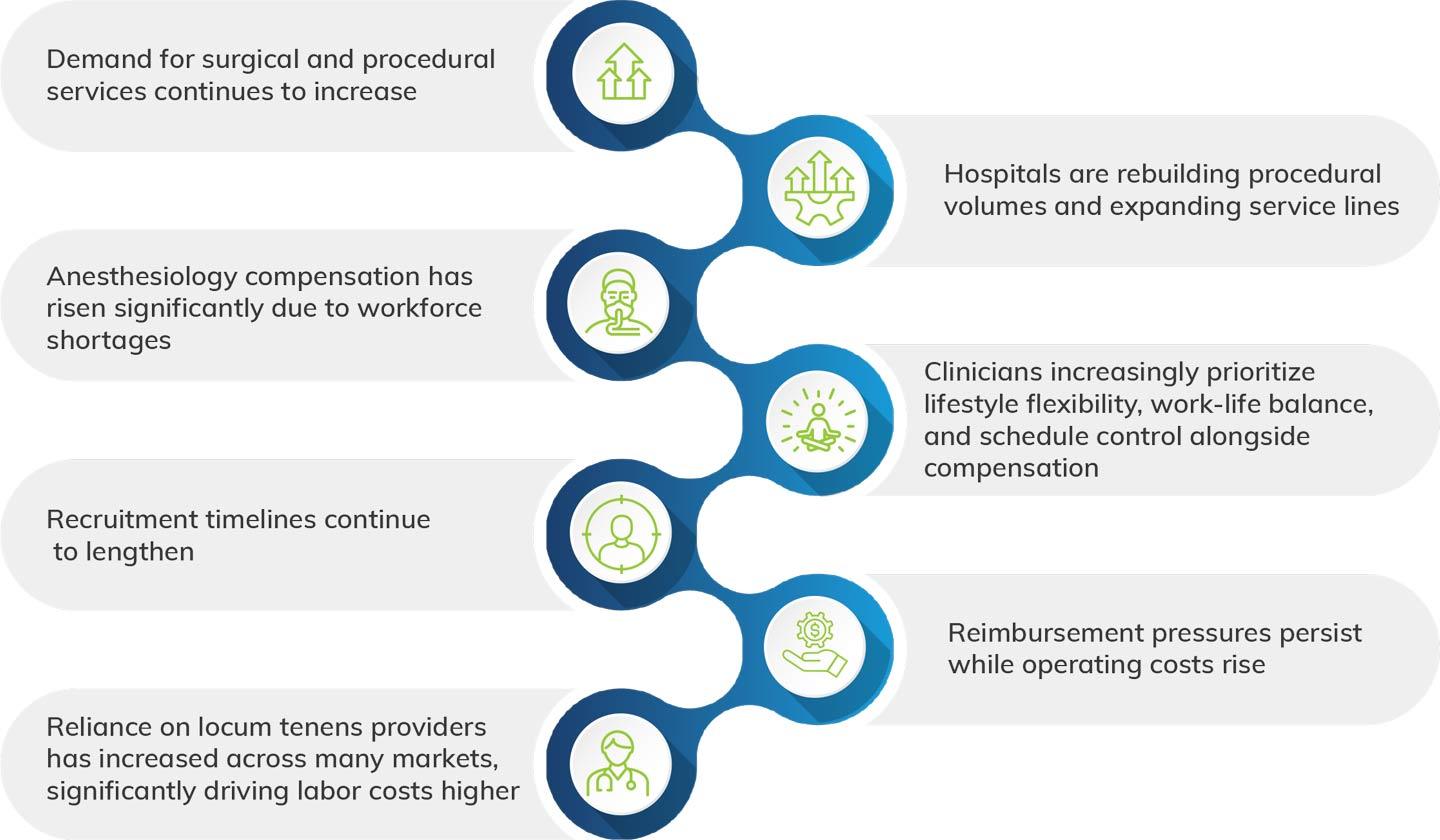
For years, hospitals have heard about anesthesiologist, CRNA, and CAA shortages. Today, those workforce pressures have evolved into a broader operational and financial challenge.
The workforce shortage is no longer simply a recruitment challenge. It has fundamentally altered the economics of anesthesiology.
As permanent anesthesiologists and advanced practice providers become more difficult to recruit and retain, hospitals and anesthesia groups increasingly rely on locum tenens providers to maintain coverage and prevent operating room disruptions. While locums can provide an important short-term solution, they often come at a substantial premium compared to employed or permanently contracted clinicians.
This growing dependence on temporary staffing has created a cycle that many organizations struggle to escape. Higher locum rates place upward pressure on permanent compensation expectations, forcing hospitals and anesthesia groups to increase salaries, signing bonuses, and recruitment incentives in order to remain competitive. At the same time, clinicians have more employment options than ever before, allowing them to prioritize compensation, flexibility, schedule preferences, and quality of life.
The result is an increasingly competitive labor market where hospitals are often paying more for coverage while receiving less workforce stability.
Anesthesiology stipends have increased dramatically across the country as organizations absorb rising labor costs, recruitment expenses, and temporary staffing support simply to maintain existing service levels. In many cases, hospitals are subsidizing a significant portion of anesthesia operations while still facing coverage gaps, recruitment challenges, and growing financial uncertainty.
At the same time, operating room closures, delayed cases, and limited surgical access can quickly erode revenue and physician satisfaction when anesthesiology resources become unstable.
The challenge is no longer simply finding providers. The challenge is designing an anesthesiology model that is financially sustainable, operationally effective, and aligned with the hospital’s long-term goals.
Leading organizations are recognizing that anesthesiology is no longer merely a staffing issue. It is a strategic business issue that directly influences surgical access, physician retention, patient throughput, revenue generation, and overall hospital performance.
The Wrong Question: “Who Should Provide Our Anesthesiology?”
Many organizations immediately focus on selecting a vendor, evaluating employment, or issuing an RFP. While those decisions are important, they often occur before leadership understands the underlying drivers of their anesthesiology challenges.
A better question is:
What outcomes are we trying to achieve?
For some organizations, the primary objective is cost containment.
For others, it is greater operational control.
Some hospitals are focused on physician retention, surgical growth, reducing locum dependence, or improving patient access.
Others need better governance, stronger accountability, or more predictable financial performance.
The right anesthesiology solution depends on the organization’s priorities.
That is why successful anesthesiology transformations begin with a comprehensive assessment rather than a predetermined answer.
The Five Questions Every C-Suite Team Should Answer
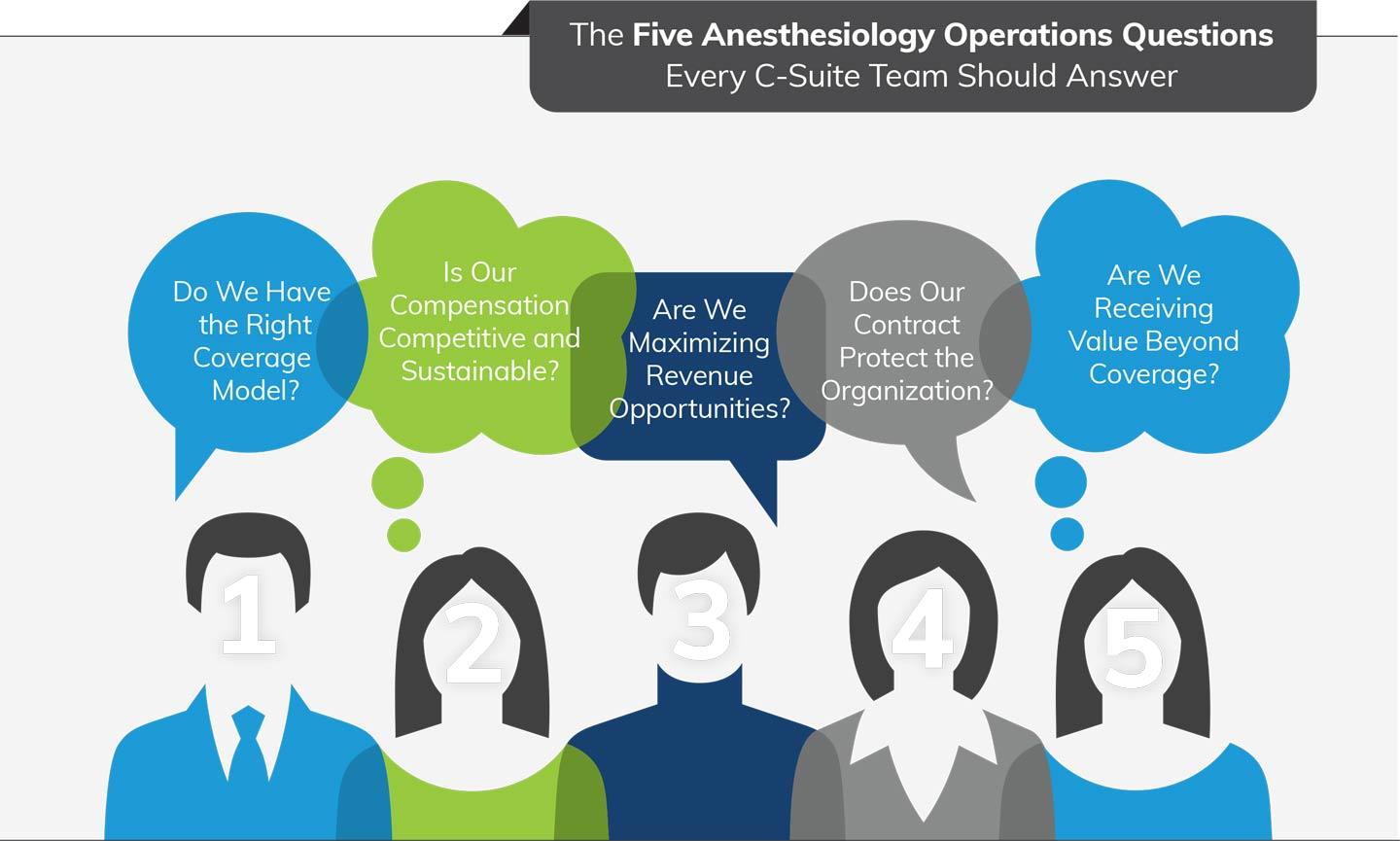
1 | Do We Have the Right Coverage Model?
Coverage requirements should reflect actual demand across:
- Operating rooms
- Labor and delivery
- Non-operating room anesthesiology (NORA)
- Endoscopy
- Interventional radiology
- Cardiology procedures
- Trauma and emergency coverage
Many organizations either overstaff low-demand periods, understaff growth opportunities, or rely on expensive locum coverage to fill persistent scheduling gaps.
A detailed coverage assessment identifies the optimal staffing model needed to support current operations and future growth while minimizing unnecessary labor expense.
2 | Is Our Compensation Competitive and Sustainable?
Compensation remains one of the largest drivers of anesthesiology costs.
Leaders need visibility into:
- Local market compensation
- Regional competition
- Recruitment realities
- Retention risks
- Workforce expectations
- Locum utilization trends
Without market benchmarking, organizations often negotiate from assumptions rather than data.
Understanding how compensation compares to the local market helps organizations determine whether rising subsidy requests reflect true market conditions or opportunities for optimization.
3 | Are We Maximizing Revenue Opportunities?
Anesthesiology financial performance is influenced by more than staffing costs.
Hospitals should evaluate:
- Revenue cycle performance
- Payer contracting effectiveness
- Documentation and coding practices
- Collection rates
- Billing structures
- Safety and quality performance
In some situations, improved revenue capture can significantly offset rising labor costs and reduce pressure on hospital subsidies.
4 | Does Our Contract Protect the Organization?
Many anesthesiology agreements were created in a very different market.
Today’s contracts should clearly address:
- Coverage expectations
- Financial support calculations
- Quality metrics
- Recruitment responsibilities
- Performance accountability
- Termination protections
- Financial transparency
- Governance structures
- Locum utilization expectations and responsibilities
Surgical Directions’ Merlin™ Anesthesia ContractCompare was developed specifically to help hospitals evaluate anesthesiology agreements across more than 50 contract categories and benchmark them against industry best practices.
The tool has helped hospitals identify significant savings opportunities, avoid unnecessary costs, improve transparency, and strengthen accountability during negotiations.
5 | Are We Receiving Value Beyond Coverage?
Perhaps the most overlooked question is:
What value does anesthesiology bring beyond providing the anesthetic?
Leading organizations increasingly expect anesthesiology leaders to contribute to:
- OR efficiency
- Throughput improvements
- Drug utilization management
- Blood utilization initiatives
- ICU support
- Procedural growth planning
- Clinical quality improvement
Anesthesiology should not simply be viewed as a coverage expense. It should be viewed as a strategic partner in perioperative performance.
Employment vs. Outsourcing: There Is No Universal Answer
One of the most common questions hospital executives ask is whether they should employ anesthesiology providers directly or contract with a management company or private group.
The reality is that neither model is universally superior.
Employment may provide:
- Greater control
- Direct accountability
- Operational alignment
- Increased governance authority
Outsourced models may provide:
- Recruitment infrastructure
- Administrative support
- Market scale
- Reduced management burden
The optimal solution depends on:
- Organizational goals
- Existing infrastructure
- Market conditions
- Recruitment capabilities
- Financial objectives
- Leadership capacity
The most successful organizations evaluate both options through an objective business lens before making a decision.
Beyond Stabilization: Building a High-Performance Anesthesiology Service
Stabilization is only the beginning. The highest-performing organizations use anesthesiology strategy as a catalyst for broader perioperative transformation.
How Facilities Build a High Performing Anesthesiology Service
These organizations focus on:
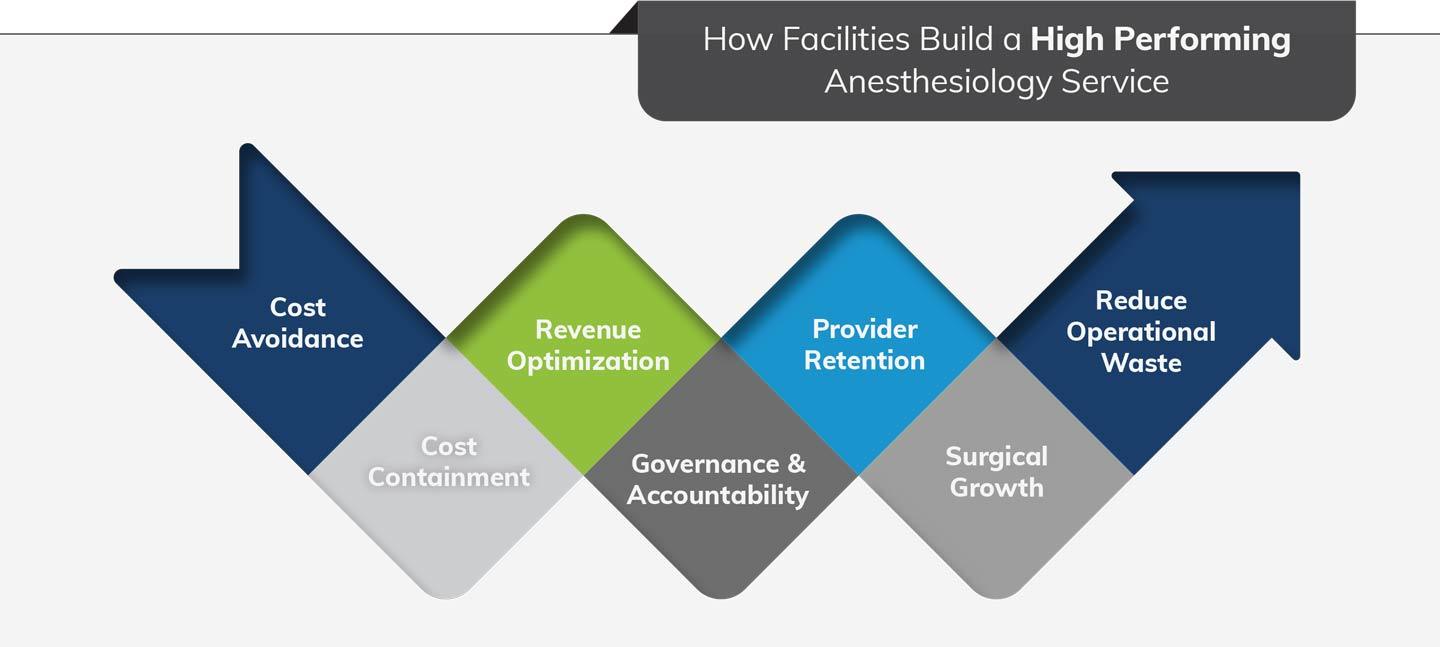
- Cost Avoidance: Reducing unnecessary expenses through optimized contracts, staffing models, and operational efficiencies.
- Cost Containment: Reducing dependence on premium-priced locum coverage, optimizing staffing models, managing drug utilization, and controlling anesthesiology-related operational expenses while maintaining access and quality.
- Revenue Optimization: Improving procedural access, increasing throughput, strengthening revenue cycle performance, and maximizing reimbursement opportunities.
- Governance and Accountability: Creating clear expectations, metrics, and decision-making structures.
- Provider Retention: Supporting clinician engagement, culture, scheduling flexibility, and long-term workforce stability.
- Surgical Growth: Aligning anesthesiology resources with procedural expansion strategies and future demand.
- Reduce Operational Waste: Hospitals that optimize OR utilization and anesthesiology deployment often create opportunities to increase surgical access while reducing operational waste.
Why Experience Matters
Anesthesiology transitions are rarely simple. They affect surgeons, proceduralists, nursing leaders, hospital executives, finance teams, and patients.
Success requires more than consulting recommendations. It requires leaders who have lived the challenges themselves.
Surgical Directions’ anesthesiology team includes practicing anesthesiologists, former health system executives, anesthesiology operators, and perioperative leaders who have successfully guided organizations through transitions ranging from single hospitals to large health systems.
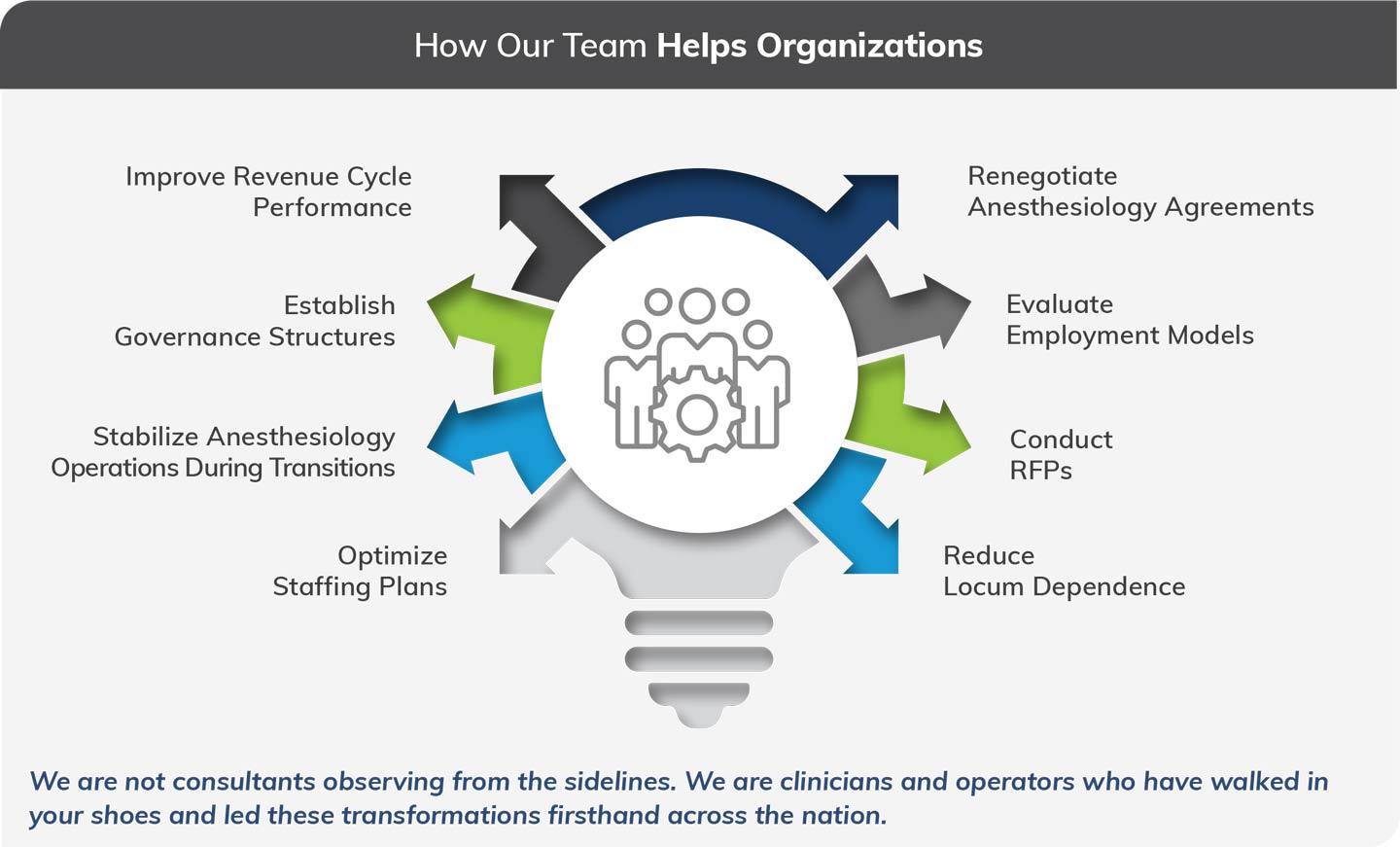
How Our Team Helps Organizations
- Renegotiate Anesthesiology Agreements
- Evaluate Employment Models
- Conduct RFPs
- Reduce Locum Dependence
- Optimize Staffing Plans
- Improve Revenue Cycle Performance
- Establish Governance Structures
- Stabilize Anesthesiology Operations During Transitions
We are not consultants observing from the sidelines. We are clinicians and operators who have walked in your shoes and led these transformations firsthand across the nation.
Conclusion
Anesthesiology is no longer simply a staffing issue. It is a strategic issue.
Hospitals that continue reacting to subsidy requests, recruitment pressures, locum expenses, and contract renewals will remain trapped in a cycle of escalating costs and limited control.
Organizations that take a strategic approach gain something far more valuable than a lower subsidy.
- They gain visibility
- They gain leverage
- They gain stability
- They gain workforce resilience
- They gain the ability to reduce reliance on expensive temporary labor
- Most importantly, they gain the ability to align anesthesiology services with the future of their organization
Because anesthesiology independence does not start with a contract. It starts with a strategy.